I recently co-authored a new article with Dr. Ann Shivers McNair titled “From ‘Spring Break’ to ‘Reading Days’: Contingency, Relations of Power, and Positionalities in Experiences of Overwork During Academic Breaks.” It’s published in Academic Labor: Research and Artistry.
What did we learn about overwork and burnout during the pandemic?
We offer practical advice in higher education for avoiding burnout in the people under your care, students and otherwise.
This post is to let you know that my first film, “This was Santa Rita,” will be screening at The Loft Cinema (for free), alongside other student films. You can watch it here: https://loftcinema.org/film/whats-up-docs/
This is the first film I have ever made, and I have learned a lot along the way. I learned to opporate a camera, the basics of film editing, structures of film that are different from writing. Overall, what a wonderful experience to take on during covid-19. It’s such a collaborative process that I actually felt connected to my community during this time of isolation. I worked with archivitsts at New Mexico State as well as Utah State University. Tucson local actors (and my neighboors) volunteered to do dramatic readings of the accounts. My friend and collegue, Kathleen,went to Grant County with me to shoot some footage. We shot a lot of bad footage, but thanks to her, we got SOME good footage. My professor Jacob Bricca spent hours giving me feedback and showing me how to use the software. I completely changed the vision of my film twice! I feel so greateful to those who shared their stories with me and to those who helped me put those stories into film.
I made many discoveries along the way; first, that I love working with film. I hope I can continue this project and theorize more about the role of film in its relationship with history and memory. I want to learn more about using film as a method in rhetorical studies. I also found bits of the story needing more explantation. Why is the Kneeling Nun so important to this community? What does the Society of Persons Born in Space do for them? How do women remember the town? How have they managed to remain a close-knit community over the years. I hope I will be granted the opportunity soon interview Santa Rita residents and learn more about what the history of the town means to them.
Baker, E. (2007). On Strike and on Film: Mexican American Families and Blacklisted Filmmakers in Cold War Era. Chapel Hill, NC: The University of North Carolina Press.
Gardner, R.W. (1991). Santa Rita under the kneeling nun. Self-published. Santa Rita Archives, Silver City Public Library, Silver City, Nm. Accessed Nov. 2018.
Huggard, CJ., & Humble, T.M. (2012). Santa Rita Del Cobre: A Copper Mining Community in New Mexico. Denver: UP of Colorado.
Kennecott Copper Corporation. (March-April 1965).Pit expansion will need Santa Rita Townsite. Chinorama,pp. 1-5. Santa Rita Archives, Silver City Public Library, Silver City, Nm. Accessed Nov. 2018.
Siegfried, S. (13 July 1996). Neighborhood thrived in Santa Rita community. Silver City Daily Press, pp. 3-4. Santa Rita Archives, Silver City Public Library, Silver City, Nm. Accessed Nov. 2018.
Solórzano, D.G. & Yosso, T.J. (Feb 2002). Critical Race Methodology: Counter-Storytelling as an Analytical Framework for Education Research. Qualitative Inquiry, 8(1), 23-44.
Steinberg, S. L. (2003). Santa Rita, New Mexico: Community report. Humboldt State University, Department of Sociology. Santa Rita Archives, Silver City Public Library, Silver City, Nm. Accessed Nov. 2018.
We stood silently in the Capilla, the weight of generations of prayers layered on one another pressed down on our shoulders. Jesus stared through us. Three hundred votives flickered in the darkness of the hand-placed stones that built up the walls, and prayers written on notebook paper stuffed the fissures of the hidden fortress, and picture of young boy printed from a laser printer and the blue ink scratched, “Do not remove until June 2007.”
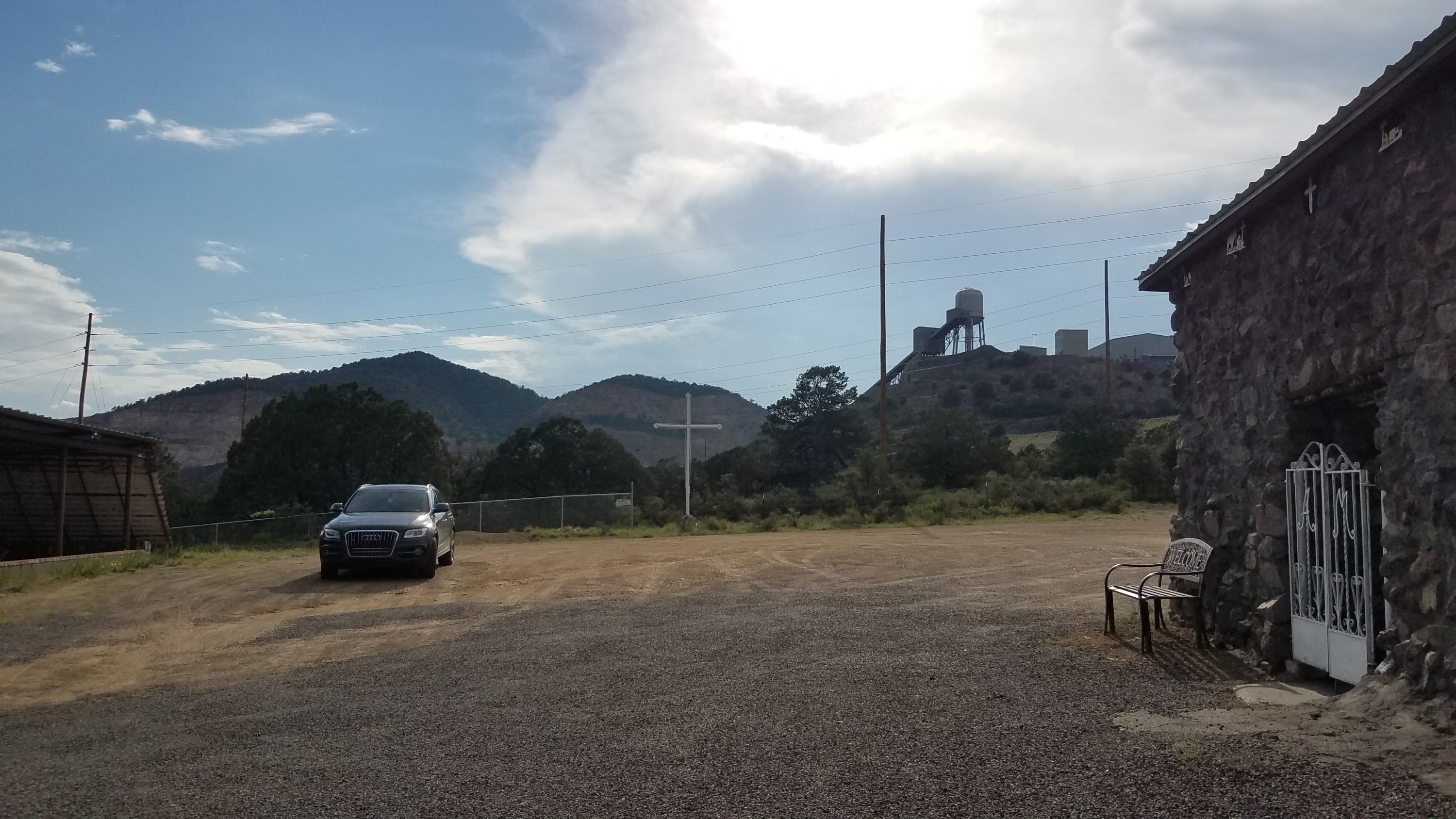
Overhead, we heard the bulldozers pushing mounds of earth precariously across the 45-degree angled surface of Hanover Mountain. A crane planted itself firmly at the top, some 80-feet lower now than where the 10-foot wooden cross once stood. It hauled the marrow of the earth up over the hill and into the unknown. Fierro was once a lively mining town. Now it is a name on a map along an unmarked road marred by the decaying remains of homes. The only building preserved against dry rot is El Sancuario de la Pieta at St. Anthony’s Catholic Church. People still travel twice per month to attend mass at St. Anthony’s. We had arrived right in time for the ceremony, but the doors were locked and the only chorus to be heard rumbled from the stomach of the mine–the mountain shaved to its core.
“There is no church this Sunday,” Zakery said, “They’re moving the mountain.”
This newest eviction in the long line of environmental injustices in the Grant County mining district. The mine that swallowed the town of Santa Rita as its pit expanded was about to engorge the memorial shrine of Fierro too.
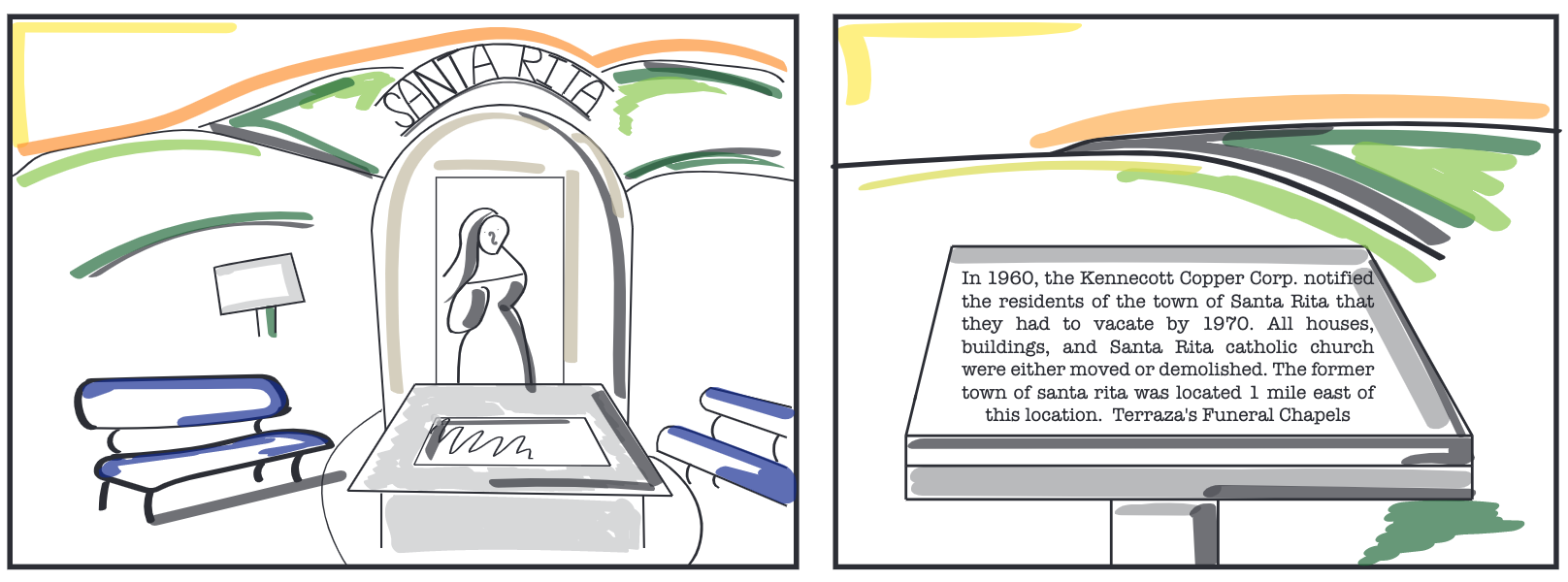
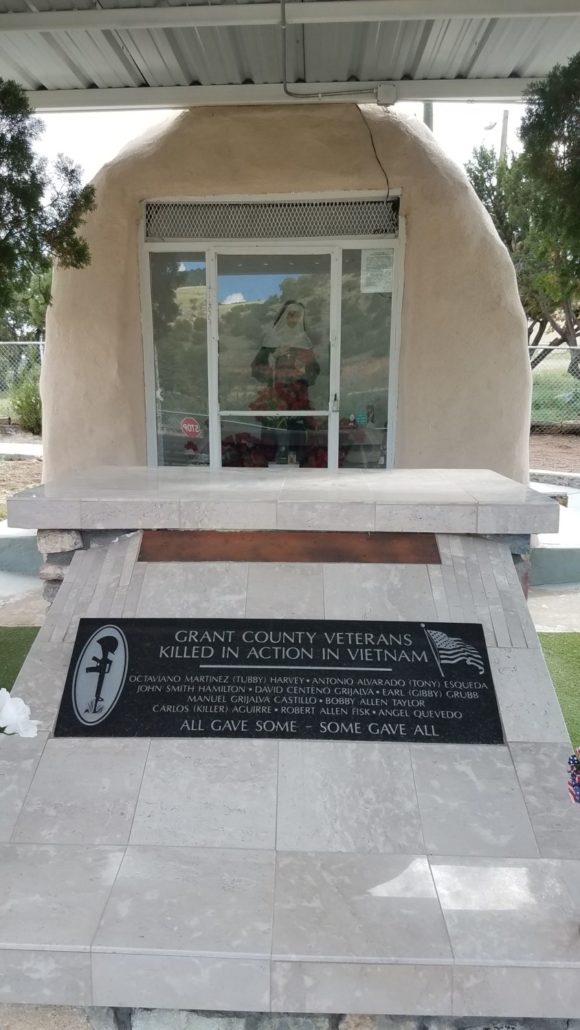
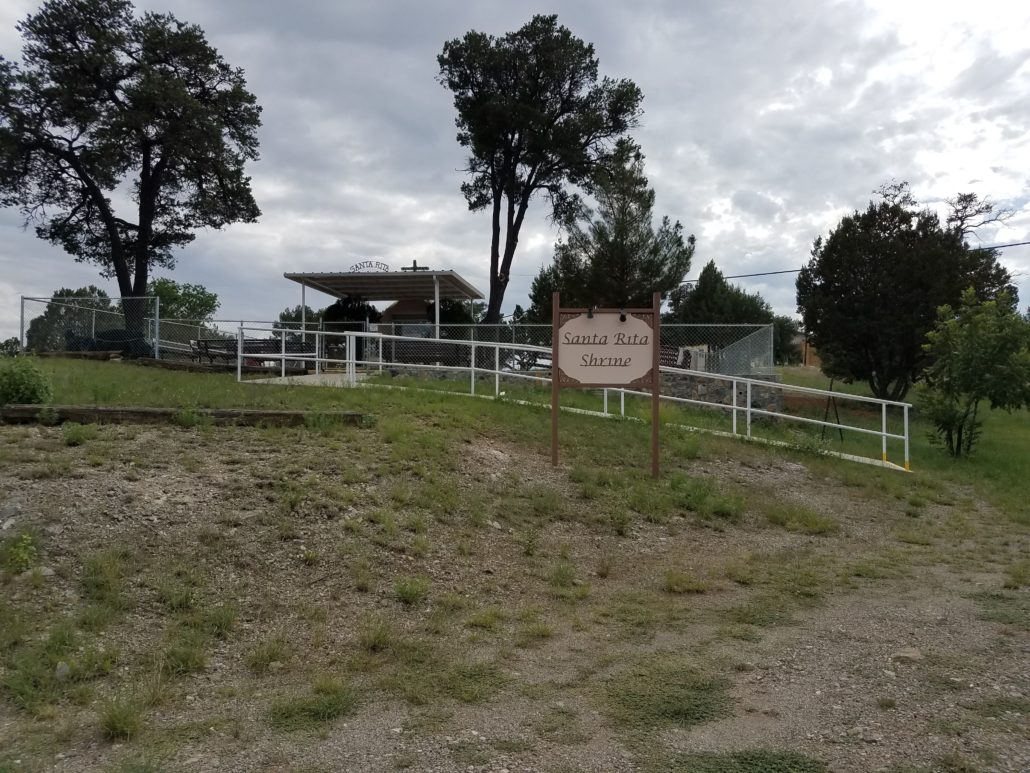
The Shrine of Santa Rita sits tucked in a battlefield of dying towns at the intersection of New Mexico highways 152 and 356. In exchange for their loss, the residents of Santa Clara were gifted a 900-square foot lot to fence in their refugee relics: Our Lady of Guadalupe stands in here a terrarium holding a rosary and overlooking a memorial to Grant County Veterans. She herself stands as a memorial praying for the Santa Rita refugees whose lives and homes destroyed. Across the pews, looking south toward exposed rainbow earth, a plaque reads:
In 1960, Kennecott Copper Corporation notified the residents of the town of Santa Rita that they had to evacuate by 1970 due to mining expansion, all houses, buildings, and the Santa Rita Catholic church were either moved or demolished. The Statue of Santa Rita was taken the village of central Miguel Ojinaga. Angel Alvarado and Moy Gonzales asked Kennecott for a section of land, and the statue was brought back with the blessing of the diocesan of El Paso and with the help of other Santa Rita residents. The shrine was built here.
The plaque speaks in half-truths about the devastations of the people, as though the plot of land smaller than the average backyard is a gift. The residents of Santa Rita did not evacuate, an optional migration in the event of natural disaster, they were evicted by their Land Lord. As the earth literally fell out from under their feet took, not only where they lived but where they went for spiritual rejuvenation, citizens of Santa Rita were left with nothing. They waited and watched the physical destruction of their town, only to see a symbol of their faith carried off in the process. Our Lady of Guadalupe, a cultural symbol for the Mexicano people sought refuge in El Paso waiting out her trial for permission to return. Now, she mourns over all of the lives lost in Grant County. The physical lives of veterans and the envision of life as it once was. Soon there would be a new memorial statue to honor the 890 women’s auxiliary who put their lives on the line in 1950 to fight for fair working conditions in the same mine. The Santa Rita shrine is a catch-all sanctuary because it is the untouched slice of a “home” they used to know. It is a cultural artifact of the little bit they could salvage.
As Glenn Albrecht explains in “Solastalgia: A New Concept in Health and Identity” the citizens of Santa Rita grieved as they watched their lands being stripped away. They felt a “relationship between the psychic identity and their home. What these people lacked was the solace of comfort derived from their present relationship to ‘home’.” The destruction of one’s land is the devastation of one’s identity, especially in a mining town where the earth is tied to their culture. The people call themselves the Salt of the Earth, both in reference to their humble nature and their inseparable identity from the ground that provides for them. The paradox of mining is knowing that you make your money exploiting the same resources you depend on for sustenance. Although the company houses did not belong to the people of Santa Rita, the land always did. When the company asserted its power to repossess all of the lands, they left families defenseless–homesick, mourning.
Much like Albrecht notes, “their place-based distress was also connected to a sense of powerlessness and a sense that environmental injustice was being on home.” They watched pit expand to consume their geographic homes, and their vision of home was destroyed as they realize how little power they had over anything. This grief is intensified knowing the Santa Rita citizens where the ones both assaulting and assaulted. They dugs the pit during the day and came home the sleep in houses they would sweep away. They understood that their paychecks would cost the people of Santa Rita their lives as they knew it.
Now Santa Rita is a whisper behind a chain-linked fence, and Fierro is dwindling as the pit runs dry. The only hope of saving the central mining district is mountain-top removal.
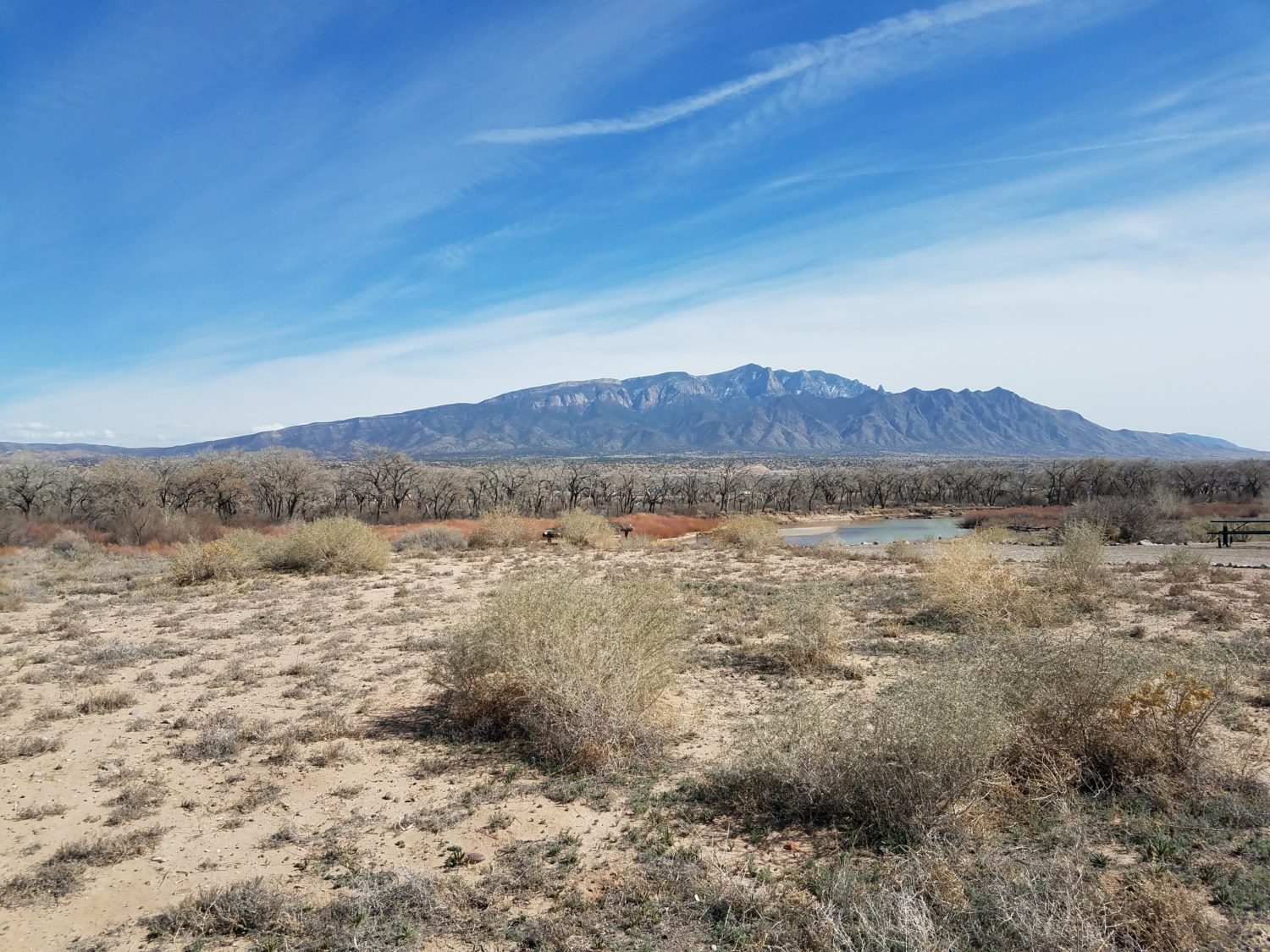
I loaded up my dog in the car and drove over to my friend’s house to pick her up. My friend is a New Mexican native, and she was so excited to go with me. She’d never been to the Coronado Historic Site, despite living so close to it for many years.
We talked about our contrasting in experiences with Southwestern history. Growing up, she took so many classes in New Mexican History that it surprises her I knew nothing. I kept trying to explain how the majority of history books leave out information and lie about what happened–how bias our textbooks are.
“This is the BEST way to learn New Mexican history” she kept telling me, and we discussed our expectations of the historic site.
We knew the Coronado Historic Site was going to be messy–the name alone promotes a bias about whos history the location represents. We were armed only with the description from the Department of Cultural Affairs:
In 1540, Francisco Vásquez de Coronado—with 500 soldiers and 2,000 Indian allies from New Spain—entered the Rio Grande valley somewhere near this site. Coronado was searching for the fabled Seven Cities of Gold. Instead of treasure, he found a dozen villages inhabited by prosperous native farmers. These newly “discovered” people spoke Tiwa, and their ancestors had already been living in this area for thousands of years. Coronado called them: Los Indios de los Pueblos or Pueblo Indians. He and his men visited all twelve Tiwa villages during the course of the next two years because they survived on food and other supplies that they obtained from them. Without the assistance of the Tiwas (willing or unwilling), Coronado and his men very likely would have starved to death.
Already we were talking about how the site focused on Coronado and erased the history of the people that lived there for hundreds of years before Spanish contact. However, we never would have imagined just how much eraser we would see.
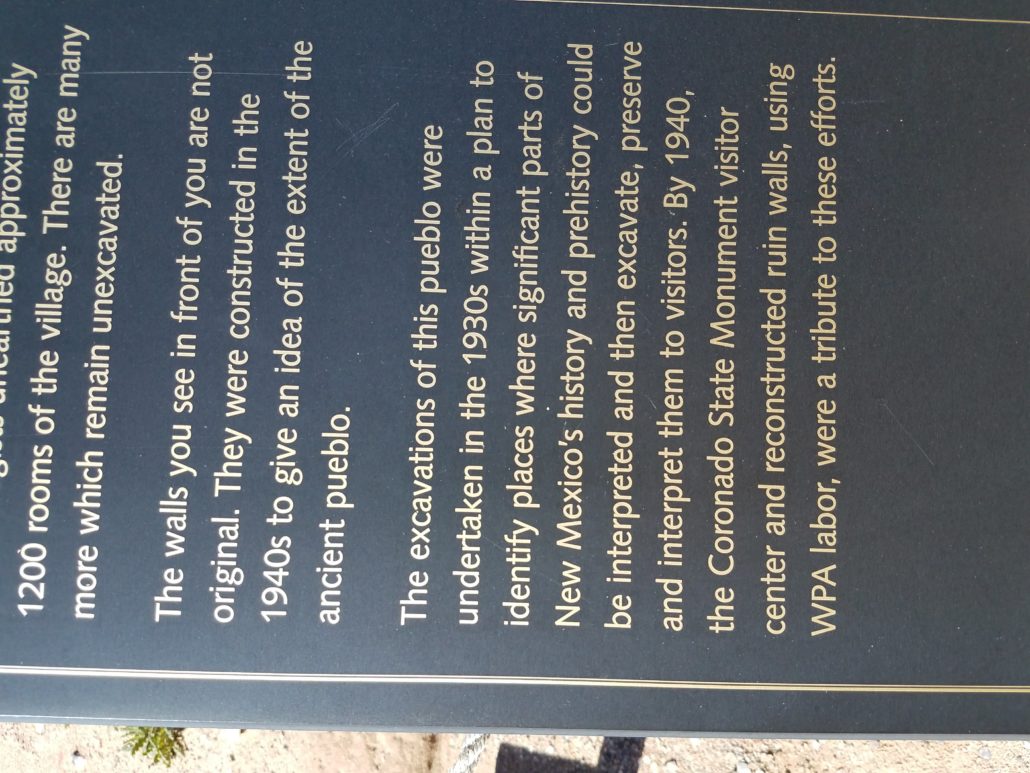
The first plaque as you enter the historic site tells a lot about the motivation for designating the historic site:
“Identify places where New Mexico’s history and prehistory could be interpreted and then excavate, preserve, and interpret them to visitors.”
We could not get past the phrase “Interpreted to visitors” because it seemed like such a contrast to the other words in the sentence. That rather than discovering and learning from the sites–an action that places visitors in direct contact with historical artifacts, the site was purposely created to add a third party between the two–someone who could present a particular angle of history. The interpreter selects what he or she finds most interesting to present to a tourist. Or worse, he or she selects the story they’d like the tourist to experience and engage with.
This is the same sentiment I saw on the Department of Cultural Affairs website, where history is driven by tourism more than an understanding of events. But Coronado site is worse than that; It’s false advertising.
Misinterpreting
We went to the state Historic Site looking for artifacts from Coronado. In reality, they have no evidence that the Spanish ever had encounters with the natives at this prehistoric village (and thank goodness). The Coronado historic site, in reality, has nothing to do with Coronado–or even the conquistadors. It’s a prehistoric indigenous village that bears the name Coronado because that’s what the interpreters wanted visitors to experience–the invasion of a village very different from their own culture.
According to our tour guide, in the late 1930s archeologists went looking for the village where Coronado passed the winter. Diaries explain that Coronado and his troops would not have survived the winter without the help of indigenous natives, and so they passed the winter together in a native pueblo before Coronado slaughtered them. In anticipation of the 200 year anniversary of Spanish Conquest in North America, archeologists wanted to find identify a place where SPANISH history collided with New Mexican collided with prehistory. Where the location could be interpreted, excavated, and interpreted for the purpose of tourism.
None of the structures at the Coronado Historic Site are original to the prehistoric ruins once found there. Not original, nor accurate. Archeologist found the remains of a village. However, the remains seemed too fragile to preserve. Therefore, shortly after excavating it, they buried it again and built up replicas. Our tour guide noted that they technics the WPA workers built in the late 30’s were not similar to those used by the original inhabitants, and even some of the structures are not to scale. However, there are no signs indicating the inaccuracies.
Misappropriating
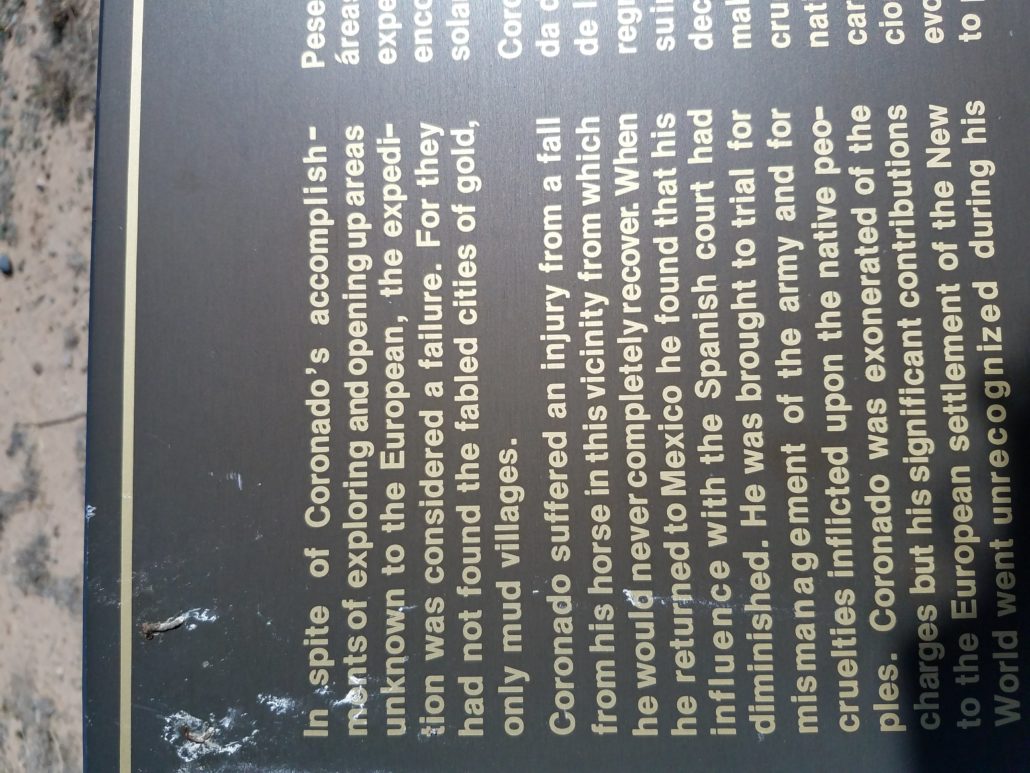
The Coronado Historic Site was meant to uncover information about Coronado’s “accomplishments of exploring and opening up areas unknown to the European.” When they did not find the artifacts to do so, they appropriated the pueblo–not just culturally, but physically and geographically. Tourists could “get an idea” of what it might be like to come across these villages as the Spanish conquistadors once did.
We see this in the plaques describing the site to contemporary visitors. They invite us to “imagine many small agricultural fields” during the peak of its time. Some descriptions are very prosey with images of the children playing with chickens in the plazas. But it’s important to understand that the sight does not invite you to experience the village from a native perspective.
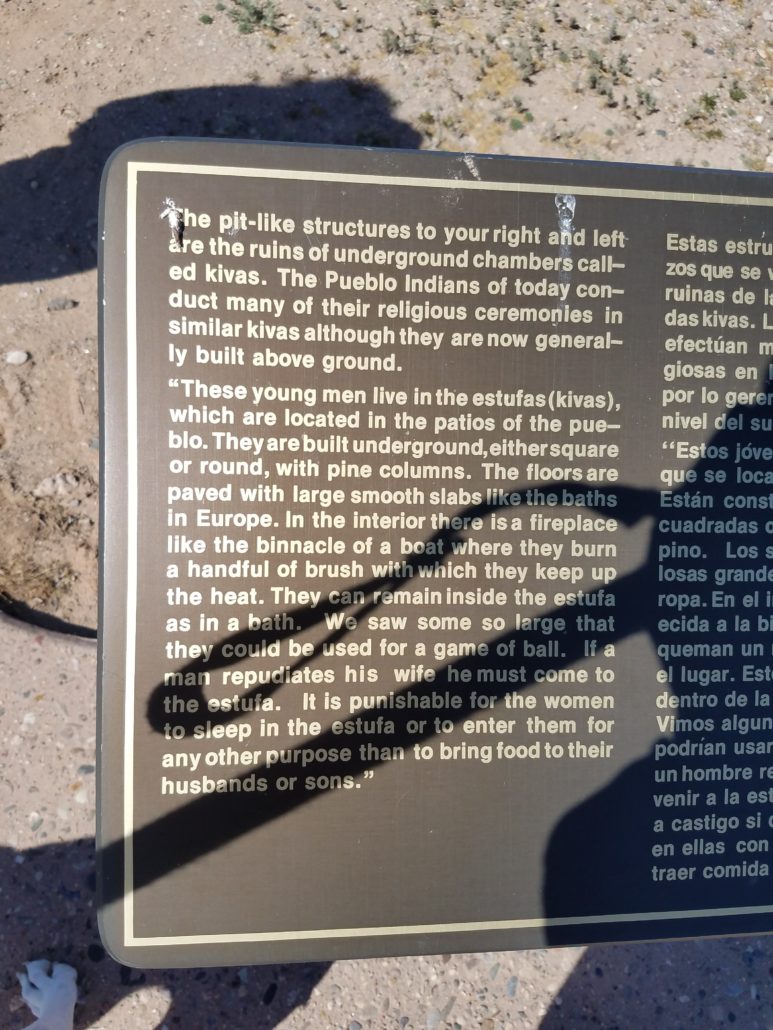
In fact, the contradictory plaques sometimes acknowledge the structures are replicas and other times suggest they are prehistoric: “The pit-like structures to your left and right are the ruins of underground chambers called kivas”
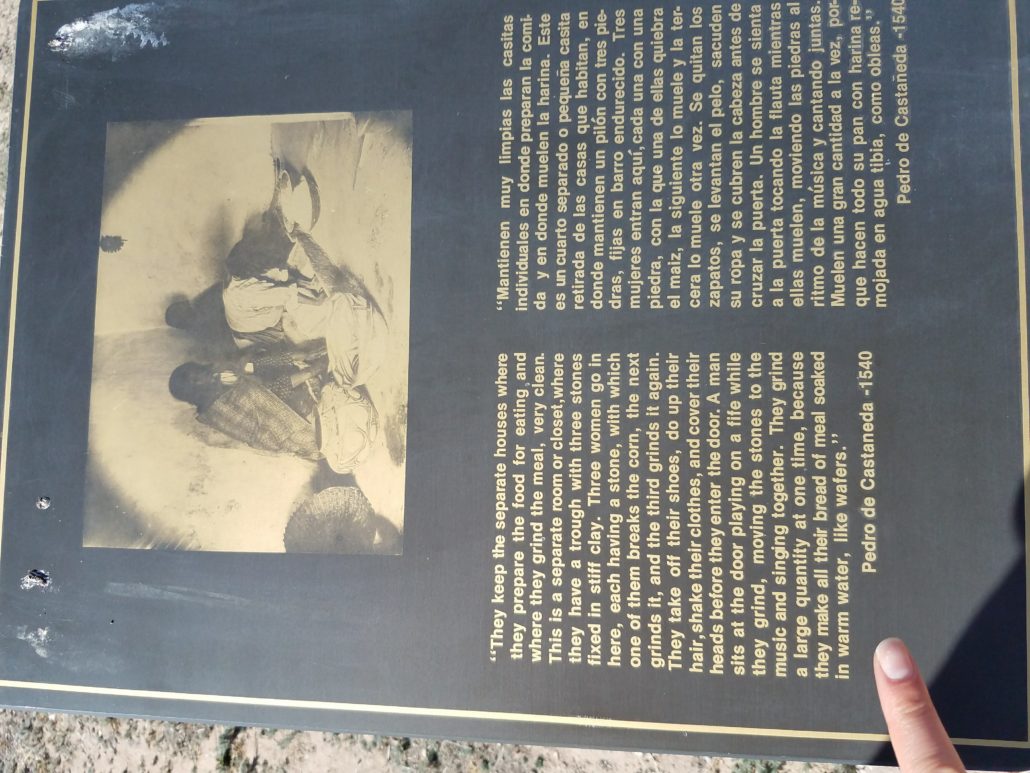
Another disturbing fault of the placards throughout the historic site is that they are from the perspective of the Spanish people despite that there is no evidence to suggest the Spanish made contact with this village. They use Spanish words, like estufa, to describe objects that do not culturally exist in Hispanic culture and history. Furthermore, the descriptions are othering in their language. They’re even offensive.
In this example, De Castañedo constantly maintains a sense of “they,” without acknowledgment of any similarities. He is surprised to find that the tribe he describes (obviously not the tribe that lived here) is hygienic in dealing with their food. We see in his language that he perceives the native as primitive and he praises their level of civility and domesticity.
Furthermore, the plaque descriptions are celebratory of conquering and neutral toward Spanish violence. In the same sentence, we read:
“He was brought to trial for mismanagement of his army and cruelties inflicted on the native people. Coronado was exonerated for of the charges, but his significant contributions to the European Settlement of the New World went unrecognized.”
You cannot take a location in time or space that represents domination and unchecked power and cruelty and remain neutral in blame. It does not accurately portray historical events. The only thing unrecognized here is how the whole historical site devalues the people that actually lived here. A native village misappropriated to Celebrate Spanish conquest and violence and covered up under the guise of tourism.
Everything about this State Historic Monument, from its name to the interpretation was already established for a particular occasion–the anniversary of Coronado coming to New Mexico–with a particular goal in mind–creating a sense of pride for the “discovery” and domination of the cultures that lived here before. Sadly, the motive that keeps all this running is a fake nostalgia, a desire to live an experience that never happened. It’s an experience that maintains the ignorance about history I learned. Worse, it invites “New” Mexicans to remain apathetic toward natives and celebratory of the violence against them.
Misleading
When I spoke to New Mexico Historic Site Instructional Coordinator, Ethan Ortega, on the phone, he made an off-hand comment that really stuck with me. He returned my call wanting clarification on what I meant when I asked about historic monument sites. A few years ago New Mexico changed the official name of the designation–State Historic Sites became State Historic Monuments. As a result, more people come to the sites looking for statues or something more resembling our collective understanding of monuments. It’s a smart rhetorical play on language to bring in revenue. The misleading and ambiguous language creates a misconception that works in favor of generating interest and revenue.
Unfortunately, that is also what we see in the Coronado State Historic Monument. Nothing is real. The name is misleading, the structures are replicas, the descriptions are biased and misappropriated. And somehow this site retains its merit as a historical interpretation for visitors. It’s clear to me how this site got its designation: capital and coercion.
After calling the State Historian’s office, I gained a bit of insight on the happenings in State Historic Site Landia.
El Camino Real Historic Trail:
First, there used to be a seventh historic site: El Camino Real Historic Trail Site. According to Deputy Historian Rob Martinez, the site recently closed because it was not making enough money from visitors to sustain itself. The state pays for a portion of the historic sites, but on some level, they need to maintain a percentage of their revenue. Since the trail was located a substantial distance from the highway, few visitors ventured out there.
What strikes me as interesting about this historic site is precisely what I saw in the others. Although it was a trading trail for indigenous groups before the Spanish commandeered it, The Department of Cultural Affairs still markets it with primarily Spanish Centric history–at least on the website: “Using a series of Native American footpaths used for trade between the indigenous people of Tenochititlán/Mexico City and Chaco, Spanish explorer Juan de Oñate “blazed” the northern portion of the trail into what is now New Mexico in 1598, and claimed the land for Spain.” The structure of the sentence alone subordinates the native history of the trail and gives privilege to Oñate with his exploration of a trail that was already well known.
We see this again in following paragraphs about the trail:
Discover the indigenous people encountered by the Spanish and the impact the arrival of the Spanish had on the formation of New Mexico. Remnants of the early journey remain today in hand-hewn carts, tools, leather water jugs, and religious altars and objects that accompanied the travelers into the northern territory.
Of course, given the charming nature of Oñate, we can expect the “encounter” was peaceable (that is sarcasm). In fact, Oñate is infamous for his unnecessary brutality against the natives. But the page fails to acknowledge the truth about history. It is an erasure of what happened–the same kind of eraser I saw in my history classes growing up. And while I cannot say that history has an ethicality or morality, certainly, the pieces left out here affect the Truth.
I am told that the visitor center is closed, but much of the trail is still accessible, including the plaques that accompany the historic site. Therefore, I would like to visit it over the next few weeks to discover if the onsite history is as bias as the website. I’ve already sent an email to request a tour. Wish me luck!
The Taylor Family Monument:
Martinez also informed me that the state is looking to acquire an additional historic site: The Taylor Family Monument. As of right now, the monument is still a family home and not open to the public. However, it is willed to the state once its current owner passes away. There seems to be at least some confusion about the historic site, the website owned by the Friends of the Taylor Family claim “The official dedication of the Taylor-Barela-Reynolds-Mesilla Historic Site (TBRM) took place in September 2006. As one of New Mexico’s eight Historic Sites, TBRM joins a special collection of culturally significant places. Each historic site tells a unique story that is important to understanding New Mexico history.” Another question to ask: Is it officially a historic site or not? If so, who decided?
Regardless, The home represents an important part of New Mexican history.
The Taylor home and two adjoining stores tell the story of settlement in the Mesilla Valley and a time when Mesilla was the center of political, commercial, and social activity in southern New Mexico. Events associated with the monument’s history include: the U.S. War with Mexico, the Treaty of Guadalupe-Hidalgo, and the Gadsden Purchase; the Confederate attempt to invade New Mexico during the Civil War; operation of the Butterfield Overland Mail Trail and Camino Real trade routes; and arrival of the railroad in New Mexico.
Without argument, the home is a symbol of the colonialism–but not Spanish colonialism like other historic sites. Instead, it represents American Colonialism. A war the United States provoked to gain land, a “treaty” which gave Mexicans living in the border states the “decision” to relocate or assimilate, and a resettling of borders in favor of building rail lines for the US. After All, these periods are what gained New Mexico statehood status.
While it is important to recognize–maybe even celebrate–the annexation of New Mexican territory, we cannot do so without acknowledging the physical and emotional displacement of the people who already lived here. The descriptions on the website fail to mention the people already living here when these pioneers settled in the Mesilla Valley in the 1850s. Furthermore, I am concerned about why we may have another state Historic Site, or perhaps we are acquiring another state historic site that represents the same populations and stakeholders already represented in the other 6.5 sites. Where is the representation of the Natives–both indigenous and Mexican?
Selective History: The Politics of Designating New Mexico State Historical Sites
I consider myself well-educated. However, on topics of history, I am afraid I have been bamboozled. When I moved to New Mexico, I was blindsided by a side of history I’d never learned. Whole wars erased from my Midwestern History books. Whole groups of people vanished as though they never existed. I grew up with the impression that The West was empty land that somehow had never been explored prior to manifest destiny. Aside from the sparse indigenous people who lived here, it was free for the taking. We are especially proud of this where I came from. I grew up in Kansas City, home of the cattle train, train head to the west. Every year we celebrate the expansion of the west with Santa Cali Gon festival. My understanding of the American West was shaped through selection– a selection of representation in the texts, and selection of representation in Hollywood. Though who makes these choices, I cannot be sure. The idea that people make active decisions about the selection history fascinates me.
Then, driving to Taos with a friend, I marveled as we turned onto Cárdenas drive–A street named after her family who has lived there for hundreds of years–long before New Mexico was one of the “United” States. As I gawked at the beautify of the land and architecture of Taos, I kept telling me friends–both native New Mexicans, “You don’t get it, you don’t get it!” I did not understand why they were not dancing through the fields with me. Personally, I do not know what it is like to stand where my family has stood for generations. I also do not know what it is like to have your entire history erased.
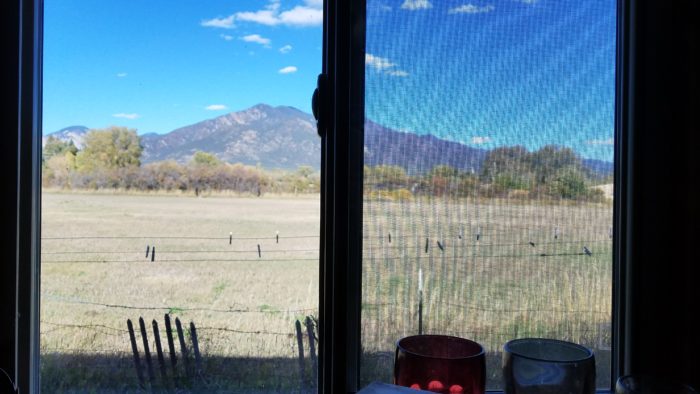
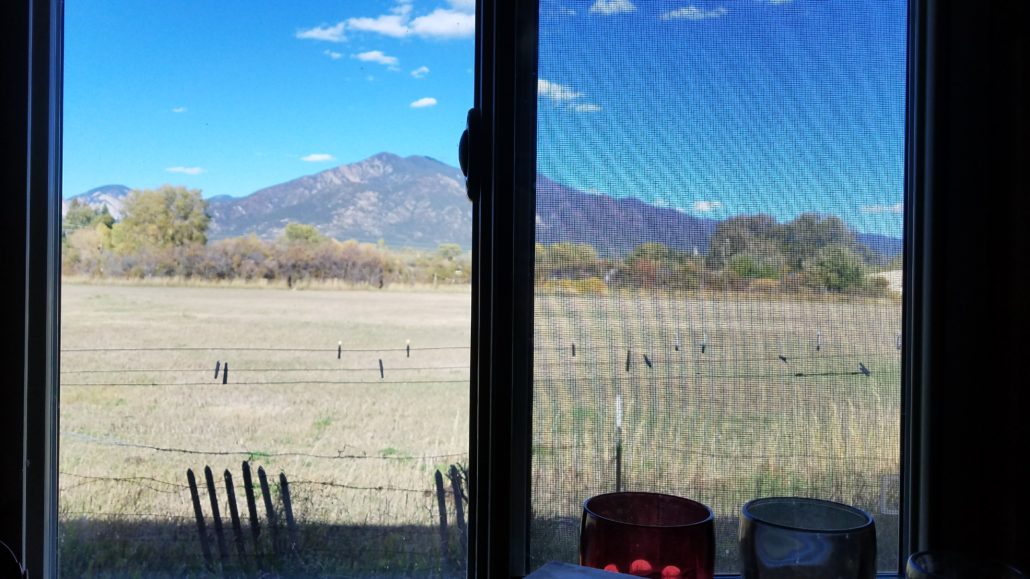
Taos mountain from the view of the Cardenas kitchen
We passed her family hacienda–sold in her lifetime and renovated into a gift shop that sells high-end art and postcards with Mountain vistas. She told me her family could no longer afford the taxes on land they’d lived on for hundreds of years.
Toas is not as well-known for the native communities that have inhabited it for hundreds of years. As the final resting place for Kit Carson, it is in some ways a monument to the great conquistadors–conquerors that established “America’s foremost, bona fide Art Colony” and tamed the sacred mountains with “a world-class ski resort.” As a student of rhetoric, this amazes me. As a friend, it appalls me. New Mexico’s history is sold on the back of tourism. While my friends know the complicated and bloody history of the American Southwest, I am lost in a daze. That night, we walked around the city Plaza, and my friend gave me a ghost tour–so many people killed.
I sit in in literature classes, and I am the only one asking questions like “Who is Santa Ana?” Everyone around me has the colonization, war, and oppression stored in their minds, written on their family bloodlines. While I was telling my friends that they didn’t understand the beauty of their own land, I am the one who has no idea. I do the reading in class, but I try not to talk. I have come to the realization that my people–white people–are the ones who took everything. We wrote the history from the perspective of the conquers. Unfortunately, we are still erasing history. We see a beautiful mountain, and we colonize it with writers, authors, and ski resorts. I’ve found that I am learning a lot more in New Mexico than I anticipated.
In an effort to both better understand a history I never learned AND discover who makes decisions about selection of history, and I embarking on a tour of the New Mexico State Historic Sites. Already, I have some concerns about the representation of history. This week, I called the New Mexico Department of Cultural Affairs to ask if what I saw on the website is true.
Lincoln Historic Site (dedicated 1966). – “Walk in the footsteps of Billy the Kid, Pat Garrett, and other famous and infamous characters of the Wild West…Lincoln is a town made famous by one of the most violent periods in New Mexico history.”
Jemez Historic Site (dedicated 1973) – “Ruins of a 500-year-old Indian village and the San José de los Jemez church dating to 1621/2.”
Fort Stanton Historic Site (dedicated 2008)- “Established in 1855 as a military post to control the Mescalero Apache Indians”
Fort Selden Historic Site (dedicated 1974) – “Built on the banks of the Rio Grande, this adobe fort housed units of the U.S. Infantry and Cavalry. Their intent was to protect settlers and travelers in the Mesilla Valley from desperados and Apache Indians.”
Coronado Historic Site (dedicated 1976) – “Coronado was searching for the fabled Seven Cities of Gold. Instead of treasure, he found a dozen villages inhabited by prosperous native farmers…Conflict with Coronado and later Spanish explorers led to the abandonment of this site within a century of first contact.“
Fort Sumner Historic Site/Bosque Redondo Memorial (dedicated 1968) – where the “U.S. Army forcibly moved the Navajo and Mescalero Apache people from their traditional homelands to the land surrounding this lonely outpost is pivotal to the history of the American West.”
And despite being few, they already seem to tell an interesting tale of New Mexican history. The historiography of the west as presented in the selection of historic monuments is eager to create exciting experiences for “New” Mexicans. The State Sector calls out the reader like you might expect from the department of tourism.
“Explore History Where it Happened: New Mexico Historic Sites are storied places where the past is palpable. They invite you to hit the road, explore, and get out in the golden New Mexico sun. It’s your chance to follow in the footsteps of indigenous people, Spanish conquistadors, Civil War soldiers, outlaws, and lawmen.”
From the brief descriptions on the website, the only footsteps I can imagine are those clad in the boots of militant occupation. In general, I see gaps in the representation of minority populations and little celebration of the borderlands people.
Perhaps more troubling to me is that there is no known process for designating future sites, and no new sites have been designated in ten years. At the very least, there are no public documents about the selection process, and no one on staff at the Department of Cultural Affairs (who oversee the cites) knows how the process works.
Research Questions:
What time periods, events, and people does the state highlight in their selection of historic sites?
What time periods, events, and people are erased or skimmed over in the selection process?
What is the process for dedicating a State Historical Site? Who makes the decisions about its selection and Dedication?
What criteria is used to select state historic sites?